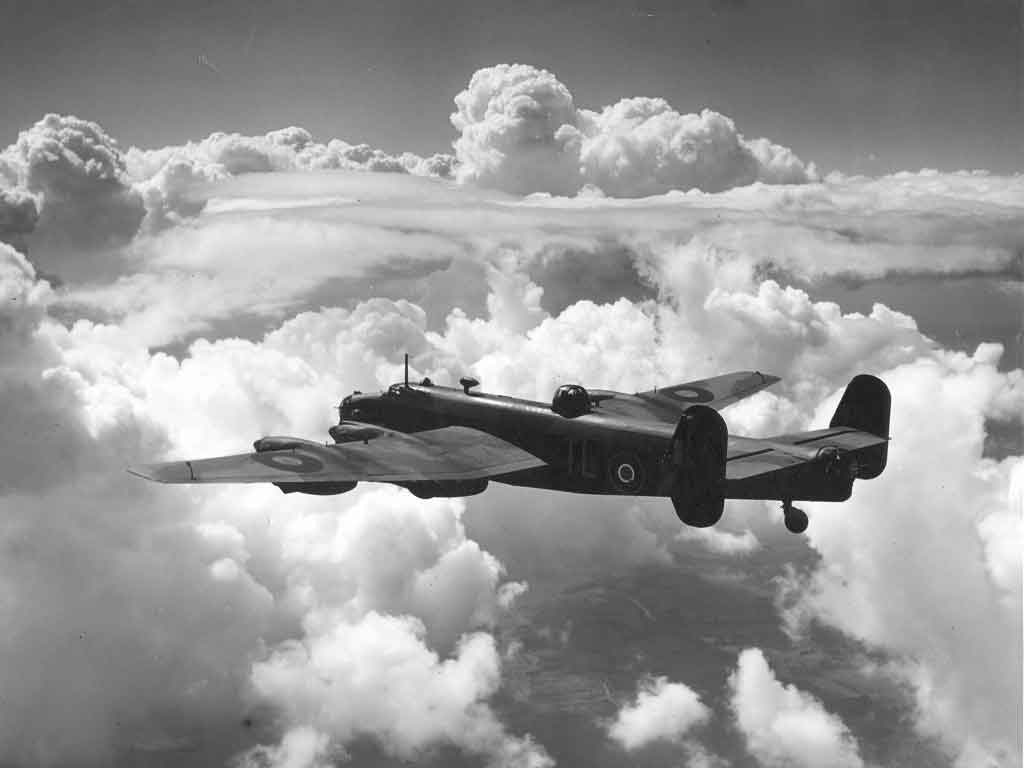
He flew with a de Havilland Mosquito (type IV, serial DZ381, code XD-W).
14 Mosquitos of 105 and 139 Squadrons were dispatched to fly at low level and attack a glassworks and the Zeiss optical-instruments factory at Jena. These were the last operations flown by the two squadrons with No 2 Group before the coming transfer to No 8 Group. The round flight from the Dutch coast was more than 500 miles. 2 Mosquitos of 139 Squadron collided on the outward flight near Paderborn and crashed; another Mosquito of 105 Squadron was also lost. 11 aircraft bombed the 2 targets with great accuracy. On the return to England, 2 more Mosquitos - 1 from each squadron - crashed in Norfolk and the crews were all killed.
518 aircraft - 274 Lancasters, 151 Halifaxes, 81 Wellingtons, 12 Mosquitos dispatched to Essen. 23 aircraft - 11 Halifaxes, 6 Lancasters, 5 Wellingtons, 1 Mosquito - lost, 4.4 per cent of the force. The weather was cloudy and skymarking had to be used. The main bombing was scattered, with many aircraft undershooting. The limited damage caused in Essen was mainly in the central and northern districts.Bombs fell in 10 surrounding Ruhr towns.
23 aircraft minelaying in the Frisians, 19 OTU sorties. 1 Stirling minelayer lost.
This record can also be found on the maps of WW2 History Europe with Google coordinates. You can find the maps by clicking on this link on this location.
There are several possibilities to investigate the flight records on WW2 History Europe. All the flights are plotted on maps, sorted "day by day", "by squadron", "by type aircraft", "by year or month", "by location" and much more! Don't miss this!!!
If you have any information that you want to share, please add your comment at the bottom of this record. Or send your information to [email protected]. This information will be added to the record.
Your photos and your information are very welcome! The young do care and with your help we keep up the good work.