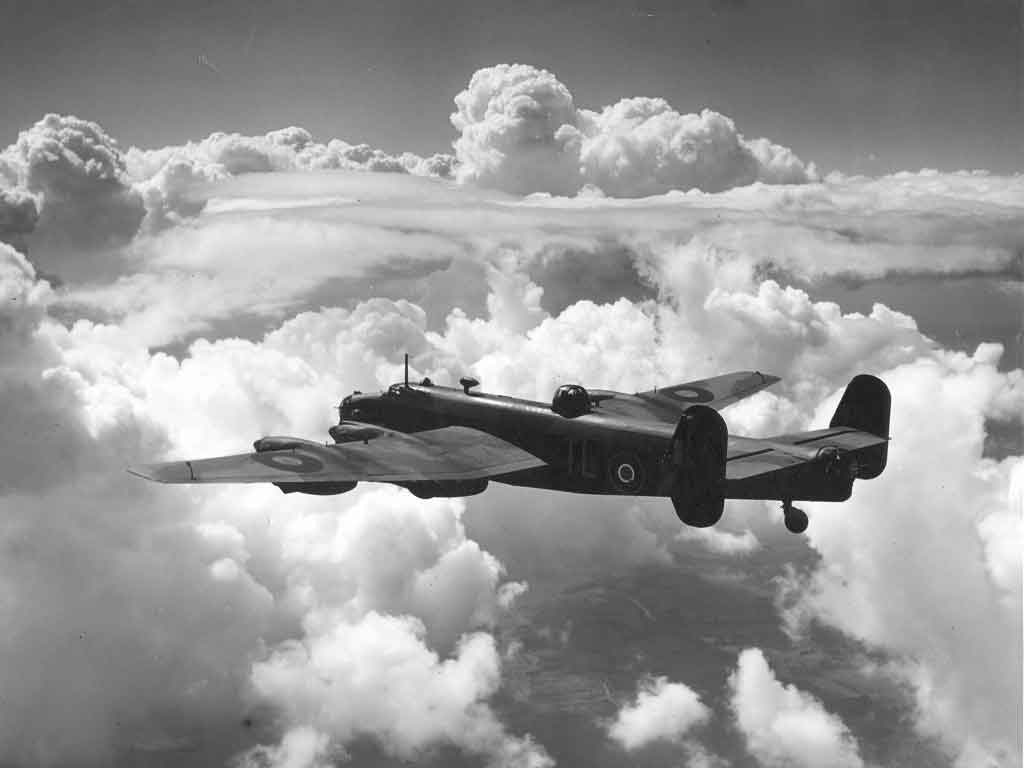
He flew with a Handley Page Halifax (type II, serial DT506, code MH-D).
157 aircraft - 65 Wellingtons, 48 Halifaxes, 40 Stirlings, 4 Lancasters attack Lorient. 1 Stirling and 1 Wellington lost.
Bombing was more accurate than on the previous night. At least 800 buildings were destroyed and 12 civilians killed. Most of the inhabitants had fled the town during the previous day.
2 Mosquitos to Aachen, 9 Wellingtons minelaying of Lorient and St Nazaire, 3 OTU sorties. The 2 Mosquitos raiding Aachen used Oboe.
201 aircraft - 190 Lancasters, 11 Halifaxes - from the Pathfinders and Nos 1, 4 and 5 Groups were dispatched to Berlin the first attack on the city for 14 months. It marked the first use of proper 'target indicators' and the use of an all 4-engined bombing force. Stirlings were withdrawn from an original plan so that only the higher-flying Lancasters and Halifaxes would participate. Most of the force was provided by No 5 Group.
The raid was a disappointment. Berlin was well beyond the range of Gee and Oboe, and H2S radar was not yet ready. Thick cloud which was encountered on the way to the target hindered navigation and Berlin was found to be covered by haze. Bombing was scattered, mostly in the southern areas, with the greatest concentration in the Tempelhof district. The report from Berlin contains some interesting items among the usual details of buildings destroyed, etc. The German air-raid warning system failed to report the approach of a large bomber force, only of a few single aircraft. The Lancasters and Halifaxes thus arrived over Berlin in the evening when a lot of people were away from their homes. The first bombs coincided with the sounding of the sirens and there were many scenes of panic until the police could control the crowds attempting to find shelter. Goebbels, the Gauleiter of Berlin, is reported as having been most angry and he ordered an overhaul of the procedure. Because of the failure, an unusually high number of people were killed, considering the weakness of the bombing: 198; but this figure includes 53 prisoners of war - 52 Frenchmen and 1 Englishman - and 6 foreign workers. Another event was that about half of the personnel of the Berlin flak units were away from the city, taking part in a course; this resulted in a very much lighter barrage than normal.
10,000 people attending a fair at the Deutschlandhalle had a remarkable escape. The air-raid police and the fire brigade managed to supervise the evacuation of every person and all the circus animals to open ground in parks around the hall. 21 people were slightly injured in the crush as the crowds left the building. Just after the last person had left, a large number of incendiary bombs fell on to the hall and it was completely burned out. None of the 10,000 people in the open near by were hurt!
The RAF casualties were also light. Only 1 Lancaster, from No 5 Group, was lost. The Bomber Command report mentions the lightness of the Berlin flak defences and assumed that the greater altitude of the bomber force surprised the German gunners.
2 Mosquitos attacked Duisburg and Essen without loss.
This record can also be found on the maps of WW2 History Europe with Google coordinates. You can find the maps by clicking on this link on this location.
There are several possibilities to investigate the flight records on WW2 History Europe. All the flights are plotted on maps, sorted "day by day", "by squadron", "by type aircraft", "by year or month", "by location" and much more! Don't miss this!!!
If you have any information that you want to share, please add your comment at the bottom of this record. Or send your information to [email protected]. This information will be added to the record.
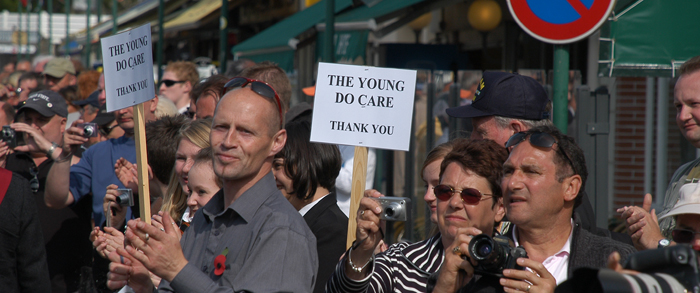
Your photos and your information are very welcome! The young do care and with your help we keep up the good work.