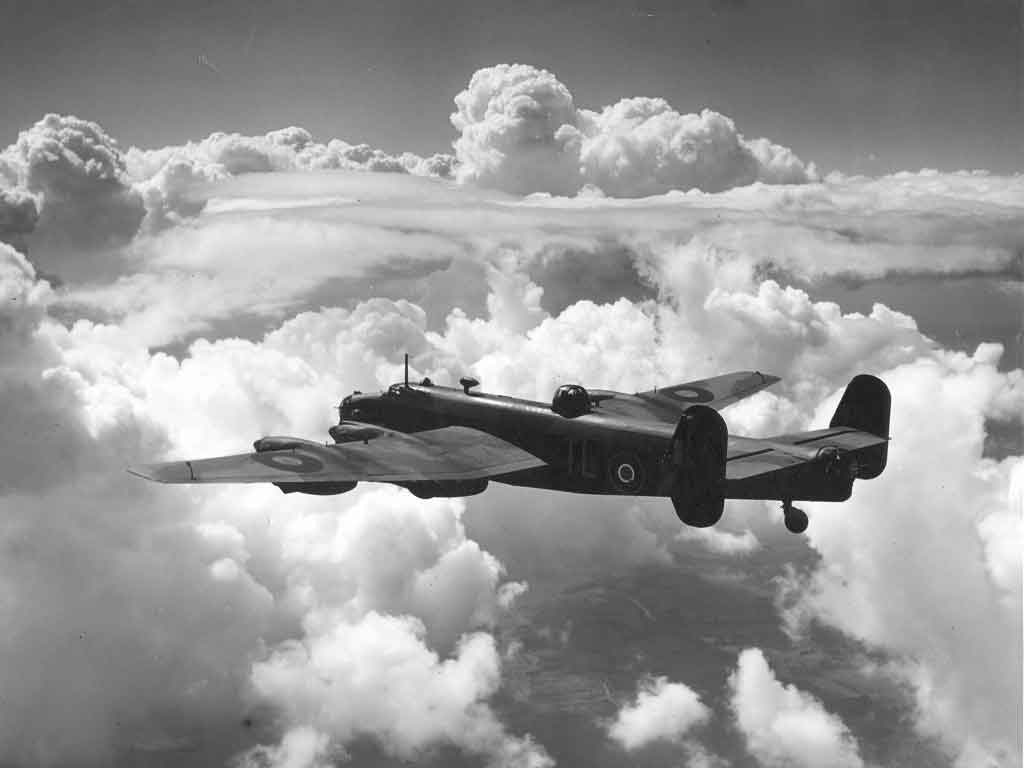
He flew with a Handley Page Halifax (type I, serial L9605, code GV-Y).
The Thousand Bomber Raid, Cologne
1,047 aircraft were dispatched, this number being made up as follows:
1 Group - 156 Wellingtons
3 Group - 134 Wellingtons, 88 Stirlings = 222 aircraft
4 Group - 131 Halifaxes, 9 Wellingtons, 7 Whitleys = 147 aircraft
5 Group - 73 Lancasters, 46 Manchesters, 34 Hampdens = 153 aircraft
91 (OTU) Group - 236 Wellingtons, 21 Whitleys = 257 aircraft
92 (OTU) Group - 63 Wellingtons, 45 Hampdens = 108 aircraft
Flying Training Command - 4 Wellingtons.
Aircraft totals: 602 Wellingtons, 131 Halifaxes, 88 Stirlings, 79 Hampdens, 73 Lancasters, 46 Manchesters, 28 Whitleys = 1,047 aircraft
The exact number of aircraft claiming to have bombed Cologne is in doubt; the Official History says 898 aircraft bombed but Bomber Command's Night Bombing Sheets indicate that 868 aircraft bombed the main target with 15 aircraft bombing other targets. The total tonnage of bombs was 1,455, two-thirds of this tonnage being incendiaries.
German records show that 2,500 separate fires were started, of which the local fire brigade classed 1,700 as large. Property damage in the raid totalled 3,330 buildings destroyed, 2,090 seriously damaged and 7,420 lightly damaged. More than 90 per cent of this damage was caused by fire rather than high-explosive bombs. Among the above total of 12,840 buildings were 2,560 industrial and commercial buildings, though many of these were small ones. However, 36 large firms suffered complete loss of production, 70 suffered 50-80 per cent loss and 222 up to 50 per cent.
The estimates of casualties in Cologne are, unusually, quite precise. Figures quoted for deaths vary only between 469 and 486. The 469 figure comprises 411 civilians and 58 military casualties, mostly members of Flak units. 5,027 people were listed as injured and 45,132 as bombed out.
The RAF lost 41 aircraft which were: 29 Wellingtons, 4 Manchesters, 3 Halifaxes, 2 Stirlings, 1 Hampden, 1 Lancaster, 1 Whitley, 3.9 per cent of the bombing force.
Bomber Command later estimated that 22 aircraft were lost over or near Cologne - 16 shot down by Flak, 4 by night fighters and 2 in a collision; most of the other losses were due to night-fighter action in the radar boxes between the coast and Cologne.
Intruder Operations
In a major effort to help the bomber force attacking Cologne, 34 Blenheims of 2 Group, 15 Blenheims of Army Co-Operation Command and 7 Havocs of Fighter Command attempted to attack German night-fighter airfields alongside the bomber route. No particular success was gained by these Intruders and 2 of the Blenheims were lost.
Total effort for the night: 1,103 sorties, 43 aircraft (3.9 per cent) lost.
5 Mosquitos of 105 Squadron were dispatched to take photographs of bomb damage at Cologne and drop a few more bombs there. These were Bomber Command's first Mosquito operations of the war but 1 aircraft was hit by Flak and later crashed into the North Sea.
2 Wellingtons were dispatched to Cologne but the area was found to be cloud-covered and no bombing results were seen. The Wellingtons both returned safely.
This record can also be found on the maps of WW2 History Europe with Google coordinates. You can find the maps by clicking on this link on this location.
There are several possibilities to investigate the flight records on WW2 History Europe. All the flights are plotted on maps, sorted "day by day", "by squadron", "by type aircraft", "by year or month", "by location" and much more! Don't miss this!!!
If you have any information that you want to share, please add your comment at the bottom of this record. Or send your information to [email protected]. This information will be added to the record.
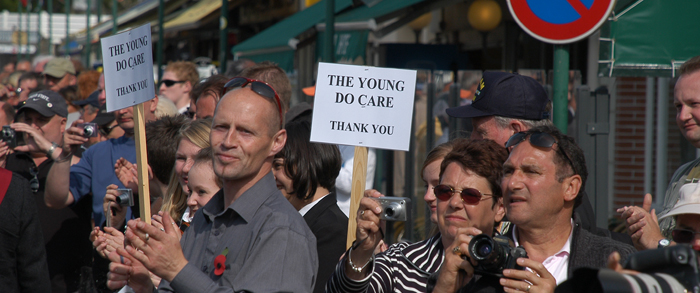
Your photos and your information are very welcome! The young do care and with your help we keep up the good work.